Paraguay Joins Global Space Community as 67th Signatory of Artemis Accords
A Milestone for International Cooperation
In a ceremony held in Asunción on Thursday, the Republic of Paraguay officially became the 67th nation to sign the Artemis Accords, signaling its commitment to shared norms for civil space exploration. NASA Administrator Jared Isaacman praised the move, stating during the event that Paraguay's participation strengthens an ever-expanding coalition of countries dedicated to peaceful, transparent, and responsible space activities. The Accords, originally established under President Trump and now implemented with a new national space policy, aim to create opportunities for signatories like Paraguay to collaborate on lunar missions and beyond.
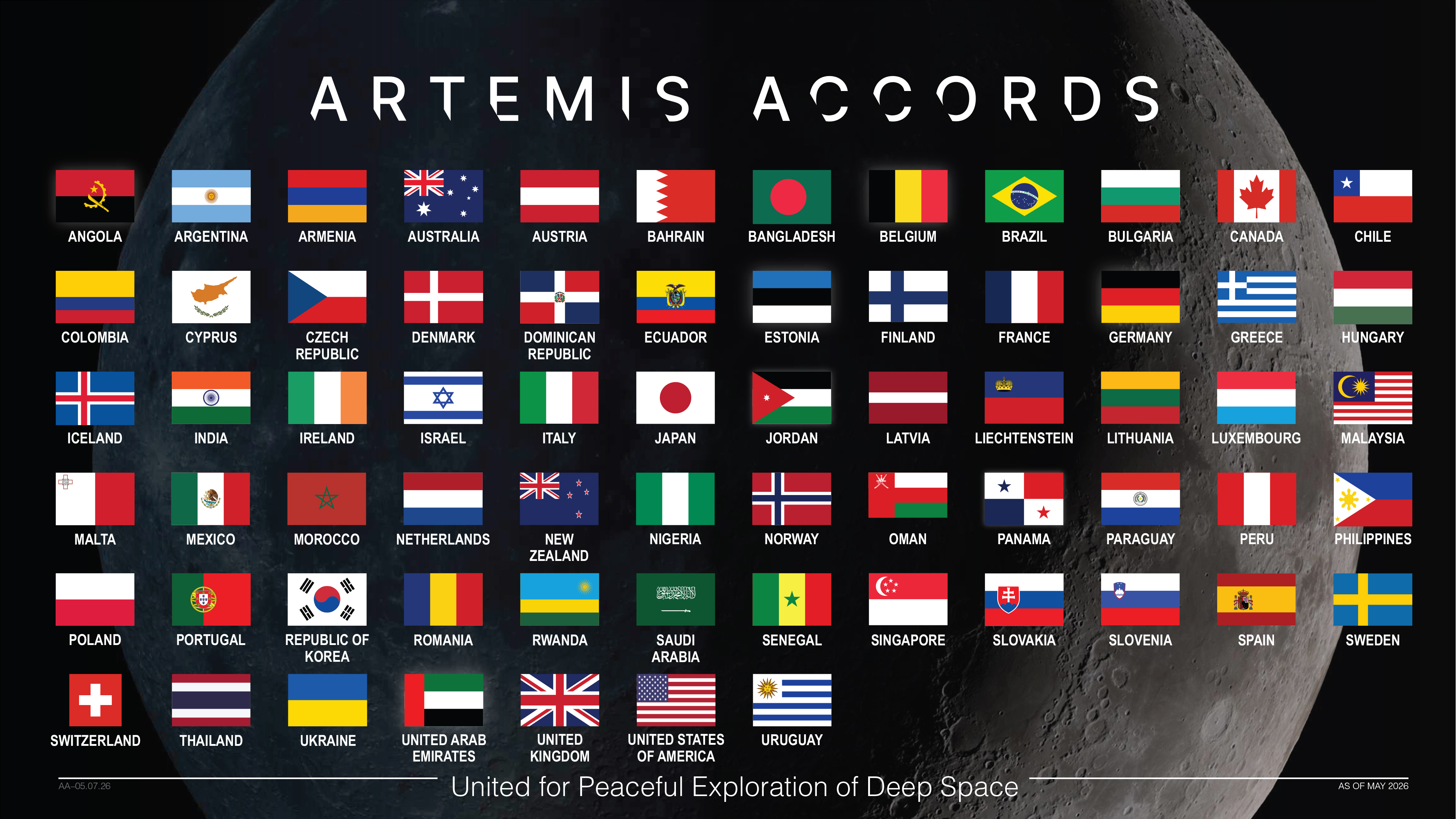
U.S. Embassy Asunción Chargé d’Affaires ad interim Aaron Pratt delivered Isaacman's remarks at the signing. Minister President of the Paraguayan Space Agency Osvaldo Almirón Riveros signed on behalf of his nation, calling it a "historic milestone" that opens doors for research, innovation, and sustainable development.
Paraguay's Growing Space Ambitions
Paraguay's space journey began with the establishment of its space agency in 2014, focusing on satellite technology and Earth observation. The country launched its first satellite, GuaraníSat‑1, from the International Space Station in 2021. Now, the agency is preparing for its second satellite, GuaraníSat‑2, scheduled for launch in October aboard a Falcon 9 rocket from Vandenberg Space Force Base in California. This mission, developed with collaboration from NASA's Jet Propulsion Laboratory and other partners, highlights Paraguay's increasing capabilities in space technology.
By signing the Accords, Paraguay reinforces its commitment to international cooperation and peaceful use of outer space. The country positions itself within the global space community, gaining access to scientific data and opportunities for joint missions.
The Artemis Accords: Principles for a New Era of Exploration
The Artemis Accords were established in 2020 by the United States, led by NASA and the U.S. State Department, along with seven other founding nations. They represent the first practical set of principles designed to enhance safety and coordination among like-minded countries as they explore the Moon, Mars, and beyond. Key principles include:

- Peaceful and transparent exploration – Ensuring activities are conducted without conflict and with open sharing of information.
- Aid to those in need – Providing assistance during emergencies or difficulties in space.
- Access to scientific data – Enabling all of humanity to benefit from research findings.
- Non-interference – Ensuring activities do not disrupt those of other nations.
- Preservation of historic sites – Developing best practices to protect artifacts and culturally significant locations.
With the current national space policy, these principles are being put into practice through NASA's Moon Base initiative, which aims to create opportunities for all signatories to join missions on the lunar surface and advance shared objectives.
What Signing Means for Paraguay
As a signatory, Paraguay gains access to a framework that promotes responsible exploration and provides pathways for collaboration. This includes potential partnerships with NASA and other space agencies, as well as participation in lunar and deep-space activities. The Accords also support the development of national space capabilities, as seen with Paraguay's satellite programs. Paraguay's involvement underscores the growing global interest in space exploration and the importance of multilateral agreements to guide it.
Related Discussions