Deep Below the Pacific Ocean, a Tectonic Plate Is Tearing Apart
A Groundbreaking Discovery Beneath the Seafloor
For the first time, scientists have directly observed a subduction zone falling apart deep beneath the ocean floor. Using advanced seismic imaging technology, researchers from the University of Oregon and partner institutions identified that the Juan de Fuca plate is splitting into multiple fragments as it slides beneath the North American plate. This unprecedented finding offers a new window into the dynamic processes that shape our planet and could ultimately refine how experts assess earthquake hazards in the Pacific Northwest.
What Is Happening to the Juan de Fuca Plate?
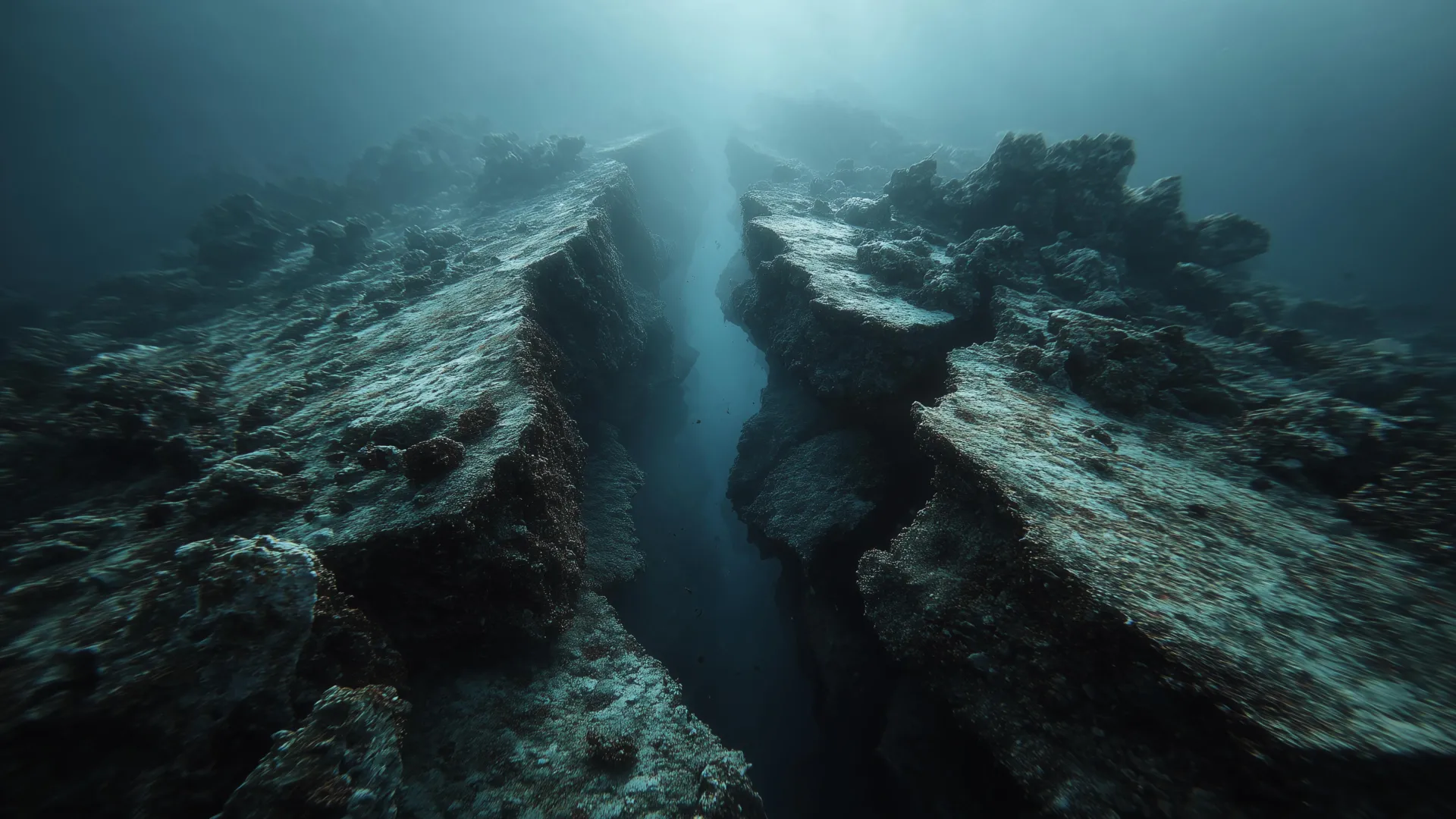
The Juan de Fuca plate is a relatively small tectonic plate located off the coast of the Pacific Northwest, from northern California to British Columbia. It is slowly diving, or subducting, under the much larger North American plate along the Cascadia subduction zone. What the latest research reveals is that rather than sliding smoothly downward in a single, coherent slab, the plate is fracturing into distinct pieces, much like a train slowly derailing—each piece separating in a sequential, piecemeal manner.
The scientists used a combination of seismic reflection and refraction data to create high-resolution images of the plate as it descends. These images show clear evidence of tearing and segmentation at depths of 20 to 50 kilometers beneath the seafloor. “It’s like watching a floor collapse under a heavy load—only the load is a massive slab of rock, and it takes millions of years,” explained one of the lead researchers.
Why This Matters for Earthquake Science
Subduction zones are responsible for the world’s largest earthquakes and tsunamis. The Cascadia subduction zone, in particular, has a history of producing magnitude 9.0 earthquakes roughly every 300 to 500 years. The discovery that the Juan de Fuca plate is fragmenting adds a crucial layer of complexity to how scientists model seismic behavior.
When a plate splits, it can alter the distribution of stress along the fault interface. Some fragments may lock and accumulate strain, while others may slip silently, reducing the potential for a major quake. Understanding these patterns helps improve seismic hazard assessments for coastal communities in Oregon, Washington, and British Columbia.
Additionally, the findings explain the presence of scattered ancient plate fragments that have long puzzled geologists. These pieces are now interpreted as remnants of previous tearing events—clues that the Juan de Fuca plate may have been breaking apart for millions of years.
How Scientists Saw the Splitting Plate
Until recently, imaging the deep structure of a subduction zone was extremely challenging. The team deployed a dense array of ocean-bottom seismometers and used air guns to generate sound waves that penetrate the seafloor. By analyzing how those waves reflect and refract, they constructed a three-dimensional picture of the plate’s interior.
The resulting images reveal distinct discontinuities—zones where the rock composition suddenly changes, indicating fractures. “We can now see that the plate is not a single, monolithic slab,” said a co-author. “It’s made of separate blocks, each with its own trajectory.”
This technique, known as multi-channel seismic reflection imaging, has been used before on land, but applying it to the offshore environment at such high resolution is a major technical achievement.
Implications for Volcanism and Coastal Geology
When a subducting plate tears, it can also influence volcanic activity. As the slab breaks, it may allow hot material from the asthenosphere to rise, altering the composition of magma feeding the Cascades volcanoes. The researchers note that the locations of some volcanic centers, such as Mount St. Helens and Mount Rainier, lie above zones where the Juan de Fuca plate appears most fractured.
Furthermore, the fragmentation could affect the topography of the seafloor and the sediment buildup along the continental margin, which in turn influences tsunami generation. A rougher, more broken plate might produce more irregular slip during an earthquake, leading to complex tsunami wave patterns.
What Comes Next: Refining Hazard Models
The immediate next step for the research team is to integrate their imaging data with existing geodetic and seismic monitoring networks. By correlating the locations of plate fragments with recorded small earthquakes and ground deformation, they hope to build a more accurate computer model of the subduction zone’s behavior.
“This discovery forces us to rethink some of our basic assumptions,” said a senior scientist. “Instead of a simple, continuous slab, we now need to account for a patchwork of pieces that move and strain in different ways.” The ultimate goal is to provide more precise earthquake forecasts that can help communities prepare for the inevitable—and potentially devastating—megaquake that the Cascadia subduction zone will one day produce.
In summary, the observation that the Juan de Fuca plate is splitting into fragments marks a major step forward in understanding the hidden forces beneath the Pacific Northwest. It underscores the importance of advanced imaging technology in unraveling the planet’s secrets and reminds us that even the most well-studied geological systems still hold surprises.
For more details, see the original research published in Geophysical Research Letters.
Related Discussions