Advanced Imaging Reveals Pompeii Victim Was Likely a Roman Doctor
A New Identification at Pompeii
Archaeologists have used cutting-edge CT scans and 3D digital reconstruction to identify one of the victims of the catastrophic eruption of Mount Vesuvius in 79 CE as most likely a Roman doctor. The discovery, announced by the Pompeii Archaeological Park, sheds new light on the lives of those who perished in the ancient disaster.
The Eruption of Mount Vesuvius
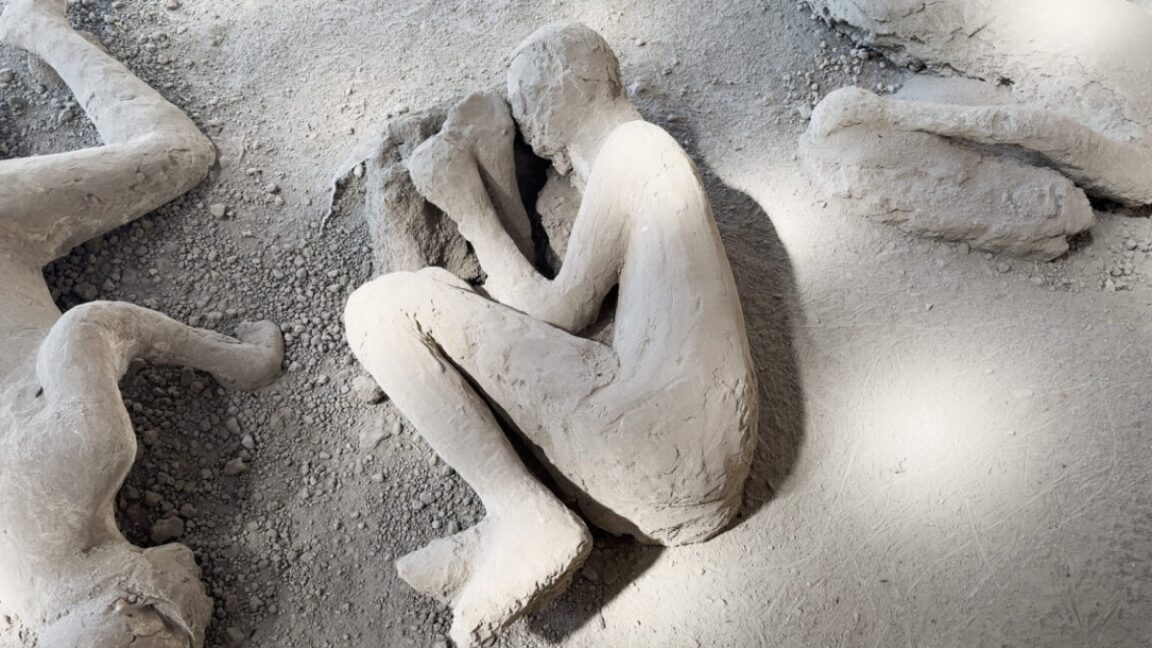
The eruption unleashed thermal energy equivalent to roughly 100,000 times the atomic bombs dropped on Hiroshima and Nagasaki at the end of World War II. Molten rock, pumice, and hot ash rained down on the cities of Pompeii and Herculaneum, which were among the hardest hit. While most of the inhabitants died from asphyxiation—choking on thick clouds of noxious gas and ash—some victims likely perished instantaneously from the extreme heat of fast-moving pyroclastic flows. Temperatures were high enough to boil brains and explode skulls.
Preserving the Victims: Plaster Casts
In the 19th century, archaeologist Giuseppe Fiorelli developed a method to create casts of the frozen bodies by pouring liquid plaster into the voids left where soft tissue had decomposed. Since then, about 1,000 bodies have been discovered in the ruins, and 104 plaster casts have been preserved. Approximately ten years ago, restoration efforts began on 86 of these casts. During this work, researchers used CT scans and X-rays to determine whether complete skeletons were present.
Modern Technology Solves an Ancient Mystery
The recent breakthrough involved applying advanced CT scans and 3D digital reconstruction to one particular cast. The detailed imaging revealed the remains of a man who had a medical kit—including scalpels, forceps, and bone hooks—near his body. Comparisons with historical medical instruments and the man's physical posture allowed experts to deduce his profession with high confidence. This case underscores the power of combining archaeology with modern imaging techniques to uncover details that would otherwise remain lost to history.
How the Reconstruction Worked
Using high-resolution CT scans, researchers created a virtual 3D model of the cast and its internal skeletal remains. The digital reconstruction allowed them to examine the objects around the body without damaging the fragile plaster. By cross-referencing the tools with known Roman medical implements, the team concluded that this individual was likely a physician who was attending to others during the eruption.
Significance of the Discovery
This identification adds a personal dimension to the tragedy of Pompeii, illustrating not just how people died but also what roles they played in life. The discovery of a doctor—someone dedicated to healing—amid the chaos of a volcanic eruption highlights the human stories embedded in the archaeological record. Future research may apply similar methods to other plaster casts, potentially revealing more about the professions and social backgrounds of the Vesuvian victims.
For more on the eruption's impact, see our article on pyroclastic flows.
Related Discussions