How to Decode a Hubble Spiral Galaxy Image: A Step-by-Step Guide
Introduction
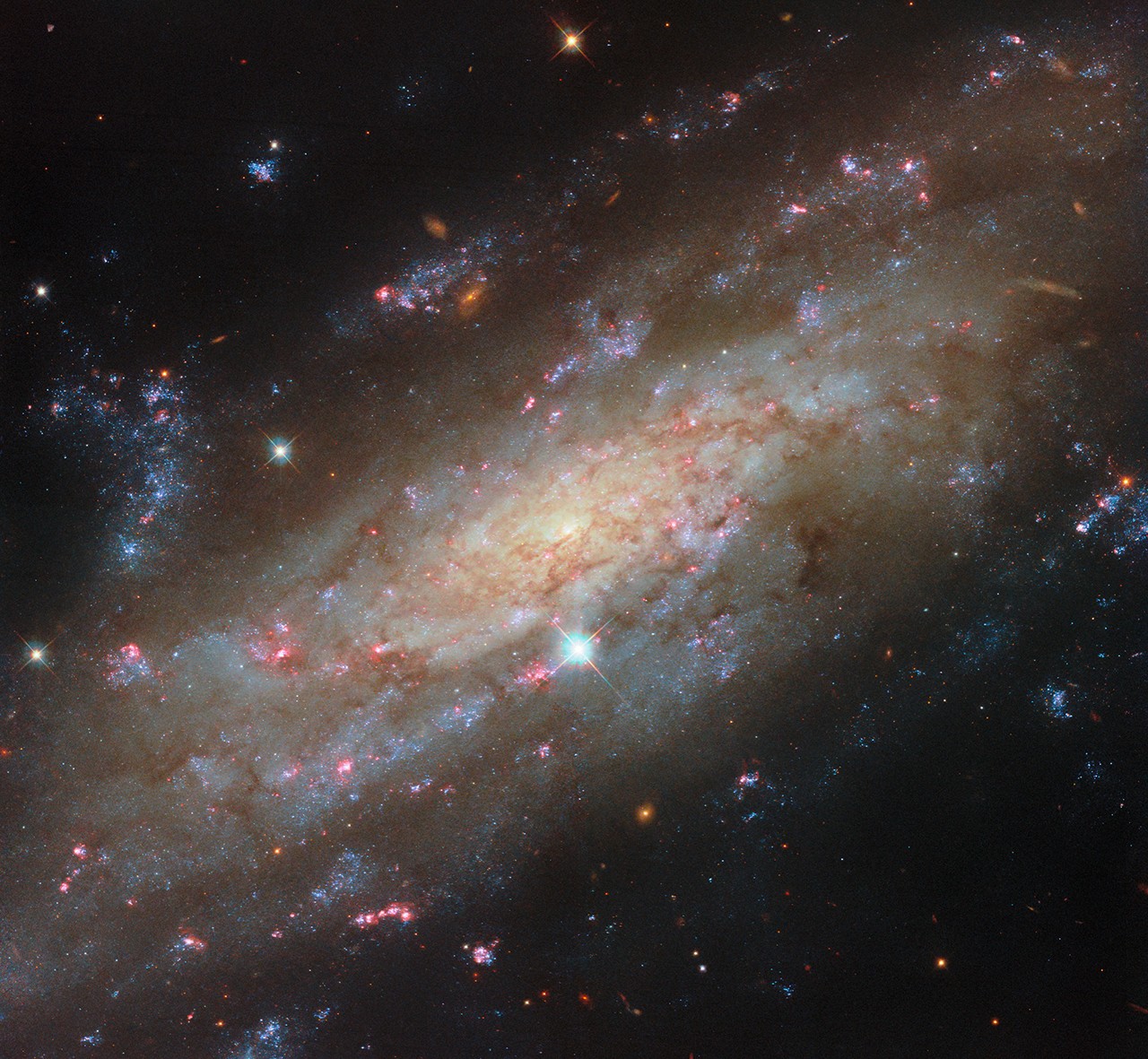
When the Hubble Space Telescope captures a new image, it offers a treasure trove of information for astronomers and enthusiasts alike. This guide will walk you through understanding a recent stunning picture of NGC 3137, a glittering spiral galaxy located 53 million light-years away in the constellation Antlia (the Air Pump). By following these steps, you’ll learn what makes this galaxy special, how its features relate to our own Milky Way, and what insights Hubble’s observations reveal about stellar life cycles, galactic groups, and supermassive black holes.
What You Need
- A copy of the Hubble image of NGC 3137 (available on the NASA Hubble website)
- Basic knowledge of galaxy types and structure
- Access to a computer or tablet for zooming into details
- Curiosity about the universe and a willingness to explore
Step-by-Step Instructions
Step 1: Identify the Galaxy’s Location and Distance
Begin by noting where NGC 3137 sits in the sky: the dim southern constellation Antlia. Its distance—53 million light-years—means the light we see left the galaxy when Earth’s first primates were evolving. This places it relatively close in cosmic terms, allowing Hubble to resolve individual stars and clusters. Check the image caption for these details to set the context.
Step 2: Recognize the Spiral Structure and Inclination
Look at the overall shape. NGC 3137 is a spiral galaxy, but from Earth it appears highly inclined—tipped nearly edge-on. This gives the spiral arms a loose, feathery appearance rather than a tight, face-on pinwheel. Notice how the dust lanes curve and break, revealing the delicate, unresolved structure typical of many barred spirals. This perspective helps astronomers understand the three-dimensional arrangement of gas, dust, and stars.
Step 3: Examine the Central Region and Dust Clouds
Focus on the galaxy’s bright core. Hubble’s sharp vision shows a network of fine, dusty clouds encircling the center. These clouds are nurseries where new stars are born and also the graveyards where old stars shed material. The center itself hosts a supermassive black hole estimated to be 60 million times the mass of our Sun. While the black hole isn’t directly visible, its gravitational influence affects the motion of nearby stars and gas.
Step 4: Study the Stellar Life Cycle
Use the image to trace the cycle of star birth and death. Bright blue clumps indicate young star clusters, while reddish regions reveal older stars and areas of glowing hydrogen gas excited by newborn stars. Dark silhouettes are dense clouds that may collapse to form future stars. The entire galaxy becomes a laboratory for understanding how galaxies evolve over billions of years.
Step 5: Compare to the Local Group
NGC 3137 is part of a small galaxy group called the NGC 3175 group, which resembles our own Local Group. Both groups feature two large spiral galaxies—here NGC 3137 and NGC 3175; in the Local Group, the Milky Way and Andromeda. Both also contain numerous dwarf galaxies (over 500 candidates in the NGC 3175 group). This similarity allows astronomers to study group dynamics and the influence of galactic interactions without having to travel far from home.
Step 6: Analyze the Six Color Bands
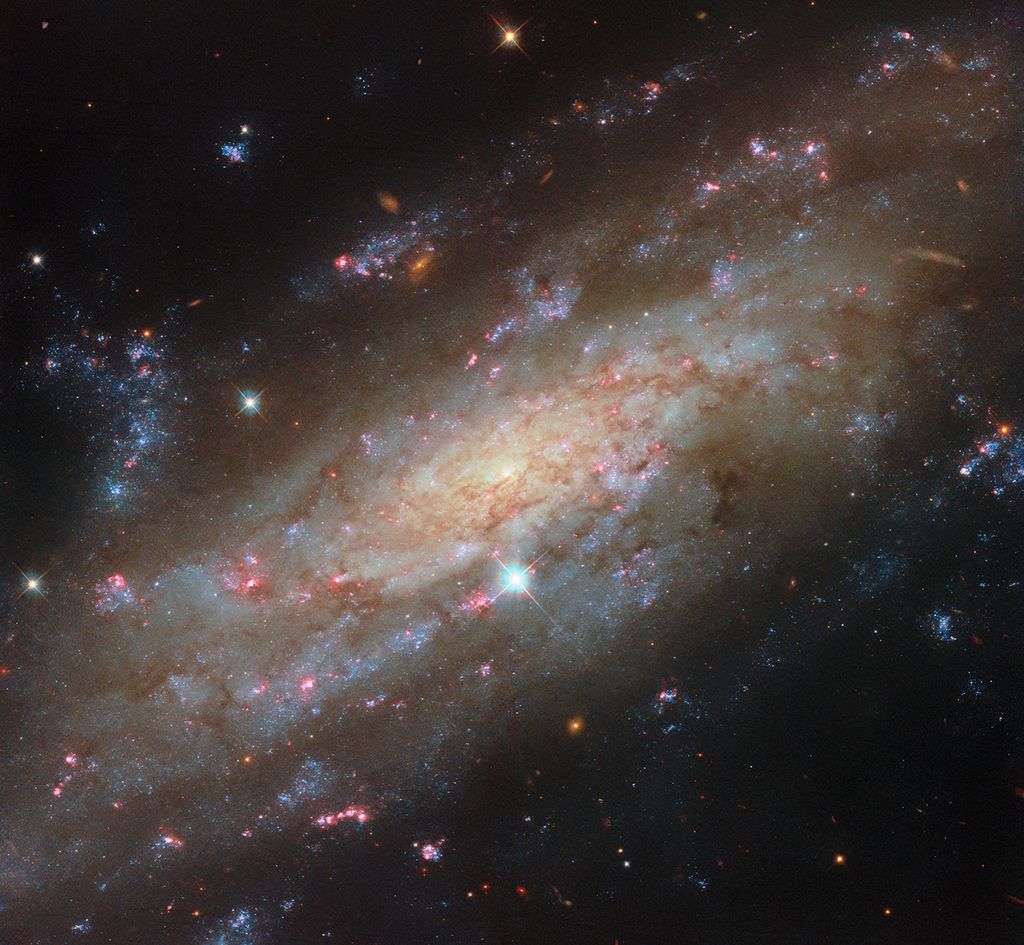
Hubble constructed this image using observations in six different color filters—from ultraviolet to near-infrared. Each filter highlights different physical properties: UV traces hot, young stars; visible light shows older stars and star clusters; infrared pierces dust to reveal hidden structures. Compare the colors in the image: blue regions are hot and young, red/orange are cooler and older. This multi-wavelength view gives a comprehensive picture of the galaxy’s composition and star formation history.
Step 7: Appreciate What This Means for Astronomy
Finally, step back and consider the bigger picture. Because NGC 3137 is nearby and similar to the Milky Way, studying it helps astronomers interpret our own galaxy’s structure and evolution, which is harder to see from inside. The detailed imagery also tests models of spiral arm formation, black hole growth, and galaxy group behavior. Each new Hubble observation like this one adds a piece to the puzzle of how galaxies form and change over cosmic time.
Tips for Further Exploration
- Visit the Hubble site’s multimedia gallery for zoomable versions of this and other images.
- Compare NGC 3137 to face-on spirals like M51 or M74 to see how inclination changes the view.
- Read about the PHANGS-HST survey to see how Hubble targets many nearby galaxies for star formation studies.
- Use planetarium software or an app to locate Antlia in the southern sky—though NGC 3137 is too faint for amateur telescopes, its celestial context is fun to explore.
- Keep an eye on Hubble’s future observations of the NGC 3175 group to learn more about its mysterious dwarf galaxy population.
Related Discussions