5 Surprising Facts About Rewriting the Genetic Code: From 20 to 19 Amino Acids
Imagine trying to remove a key ingredient from a recipe that has worked flawlessly for billions of years. That's exactly what a team of researchers from Columbia and Harvard recently attempted — they set out to shrink the genetic code by eliminating one of its 20 essential amino acids. The genetic code, with rare exceptions, is universal across all life on Earth, encoding the same set of 20 amino acids that form the building blocks of proteins. This code likely dates back to the last universal common ancestor. But scientists have long wondered: Did earlier life forms get by with fewer amino acids? To test this, the team engineered a part of the ribosome that functioned without isoleucine. Here are five things you need to know about this groundbreaking work.
1. The Genetic Code Is Almost Invisible — and Nearly Universal
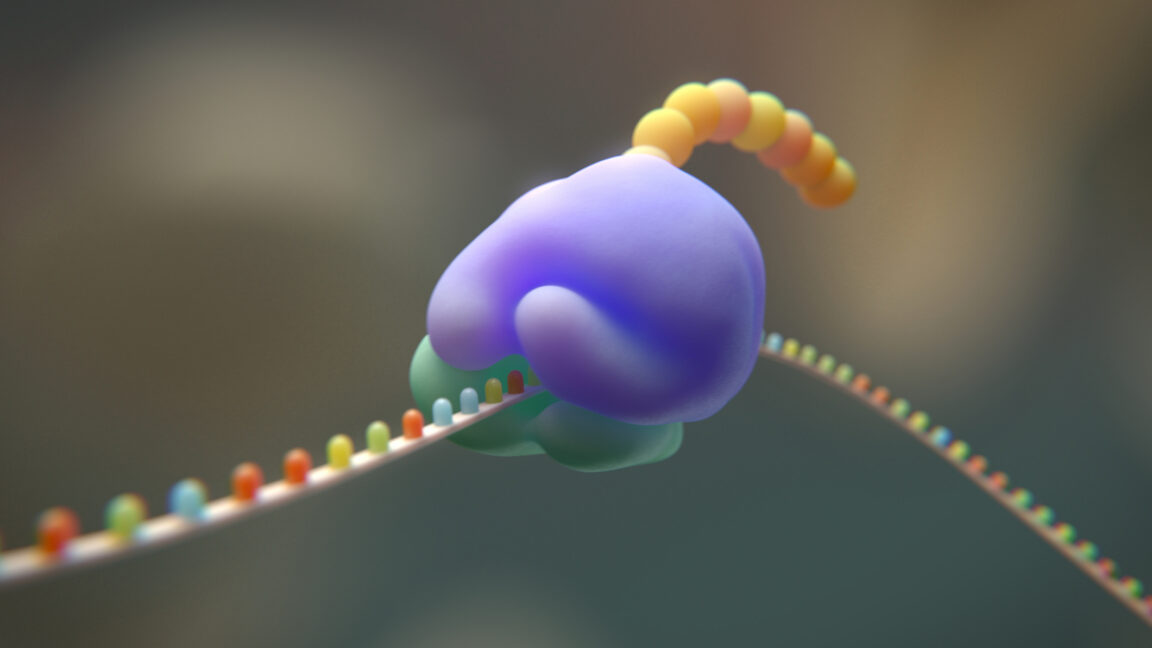
Every living organism, from bacteria to blue whales, uses the same basic genetic script. With minute variations, the code translates trios of DNA bases (codons) into one of 20 amino acids. This consistency suggests that the code was already fully formed in the last common ancestor of all life. Scientists have found no major exceptions to this universal system, making it one of biology's most stable features. The code's robustness has led researchers to ask: Could it have once been simpler? That question drives the effort to reduce the number of amino acids.
2. The Hypothetical 'Proto-Code' Might Have Used Fewer Building Blocks
Many evolutionary biologists hypothesize that the earliest forms of life had partial genetic codes that used fewer than 20 amino acids. In a primitive RNA world, only a handful of amino acids might have been available. As metabolism grew more complex, the code expanded to incorporate more. The Columbia-Harvard team decided to put this theory to the test by attempting to remove one amino acid from the modern code. Their choice: isoleucine, a hydrophobic amino acid critical for protein structure. If they could make a functional ribosome without it, that would lend support to the idea that a simpler code is possible — and perhaps even ancestral.
3. The Experiment Targeted the Ribosome — the Cell's Protein Factory
The researchers focused on the ribosome, the molecular machine that translates mRNA into proteins. Ribosomes themselves are made of proteins and RNA, and they require specific amino acids to maintain shape and function. The team engineered a portion of the ribosome to work without isoleucine by substituting other amino acids and tweaking the RNA sequence. This was a proof-of-concept: if a core component of the translation machinery could survive missing one amino acid, then perhaps the entire cell could eventually be redesigned to operate with only 19 building blocks.
4. Practical Payoffs: Why Shrink the Code?
At first glance, removing an amino acid seems like a backwards step. But the work isn't about regressing evolution — it's about expanding biotechnology. If researchers can delete a canonical amino acid, they could replace it with a synthetic one, enabling novel chemistry. This opens doors to creating proteins with unnatural properties, such as improved drug delivery or new materials. Moreover, a streamlined code could help design genetically recoded organisms that are resistant to viruses or can produce complex therapeutics. The ability to eliminate an amino acid is the first step toward a fully programmable genetic code.
5. The Road Ahead: From One Deletion to a New Code
Getting rid of isoleucine in just a piece of the ribosome is a long way from deleting it from the entire genetic code. The team's success is a proof of principle, but many challenges remain. The cell must be able to import, charge, and use the remaining 19 amino acids without fatal errors. Off-target effects could cause proteins to misfold or malfunction. Still, the experiment provides a blueprint for future efforts. As the researchers refine their methods, they'll test whether life can truly thrive with a reduced alphabet — and what that means for our understanding of evolution.
In conclusion, rewriting the genetic code from 20 to 19 amino acids is more than a party trick for molecular biologists. It offers a window into the deep history of life, a toolkit for synthetic biology, and a challenge to our assumptions about what is essential. As researchers continue to tinker with the fundamental basis of heredity, we may one day see organisms that speak a slightly different genetic language — one that is even more adaptable and useful to humanity.
Related Discussions